5 Everyday Habits That Support Healthy Brain Circulation
Most people think about circulation in terms of their heart or their legs after a long flight. Almost nobody thinks about it in terms of their brain, even though the brain is one of the most blood-flow-hungry organs in the body. Here are five habits worth building into an ordinary week.
1. Get Up and Move Every Hour
Long stretches of sitting are linked to sluggish circulation throughout the body, and that includes the smaller vessels that feed brain tissue. A two-minute walk around the room once an hour is a low-effort way to keep blood moving.
2. Don't Let Yourself Get Chronically Dehydrated
Blood is largely water. Even mild, day-to-day dehydration can thicken blood slightly and make circulation less efficient. Keeping a water bottle within reach is one of the simplest habits on this list.
3. Watch Your Posture at a Desk
A hunched, forward-leaning posture can restrict blood flow through the neck and shoulders on its way to the brain. Small adjustments, like raising a monitor to eye level, add up over a workday.
4. Prioritize Sleep Consistency Over Sleep Perfection
Circulation patterns, including in the brain, follow your body's natural rhythms. Going to bed and waking up at wildly different times each day disrupts those rhythms more than most people realize.
5. Build a Daily Nutrition Routine Around Circulatory Support
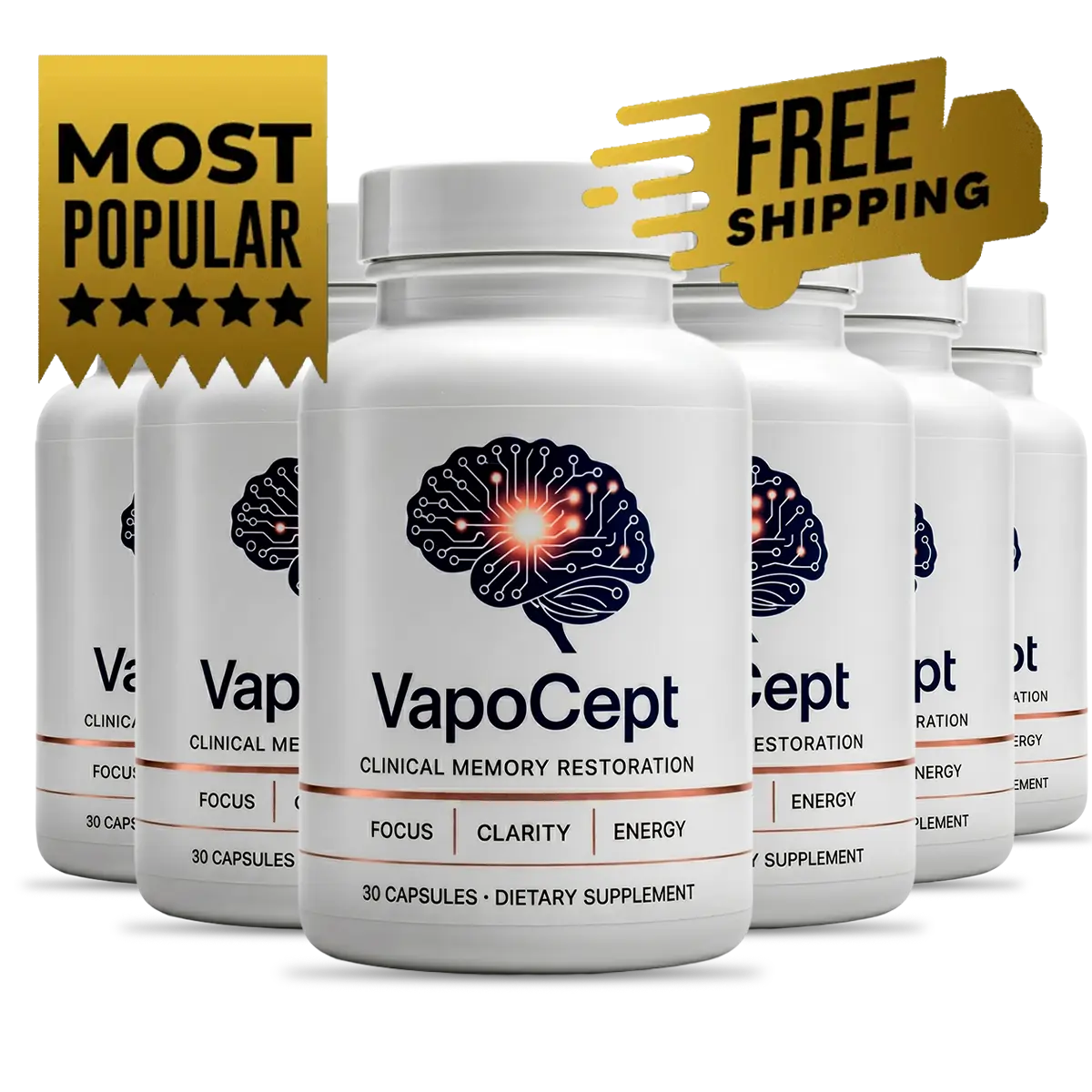
This is where a formula like VapoCept fits in for a lot of people: a simple, once-a-day habit built around ingredients formulated to help support the body's natural nitric oxide production and healthy blood flow. You can see the full ingredient breakdown on our VapoCept ingredients page.
Brain Fog After 50: Why It Happens and What Actually Helps
"Brain fog" isn't a formal medical diagnosis, but almost everyone over 50 knows exactly what it feels like: a kind of mental static that makes it harder to focus, recall words, or hold onto a thought for more than a few seconds.
Why It Tends to Show Up With Age
A few overlapping factors tend to contribute. Circulation naturally becomes less efficient with age. Sleep quality often declines. Stress and multitasking demands frequently increase, especially for people juggling work, family, and caregiving responsibilities at the same time. None of these factors act alone; they tend to compound each other.
What Usually Helps First
Before reaching for any supplement, the basics matter most: consistent sleep, regular movement, and hydration. From there, many people look at nutrition support that's specifically aimed at circulation, since the brain's dependence on steady blood flow becomes more pronounced with age.
Where a Circulation-Focused Formula Fits
This is exactly the gap a formula like VapoCept is designed to address. Rather than a stimulant that masks fatigue temporarily, it's built around amino acids tied to the body's nitric oxide cycle. You can read more about how that mechanism works on our how VapoCept works page.
Nitric Oxide and the Brain: What the Research Actually Says
Nitric oxide gets thrown around a lot in supplement marketing, so it's worth stepping back and looking at what this compound actually does in the body, without the hype.
What Nitric Oxide Actually Is
Nitric oxide is a signaling molecule your body produces naturally. One of its best-documented roles is helping the smooth muscle inside blood vessel walls relax, which allows those vessels to widen. Wider vessels mean less resistance, and less resistance means blood, and the oxygen it carries, can move more freely.
Why the Brain Specifically Cares About This
The brain doesn't store much energy on its own. It depends almost entirely on a continuous, moment-to-moment blood supply. General nutrition science has taken ongoing interest in how amino acids like arginine and citrulline, both nitric oxide precursors, may support this kind of healthy circulation as part of an overall wellness routine.
What This Does (and Doesn't) Mean for a Supplement
It's important to be precise here: supporting nitric oxide production is not the same as treating a medical condition, and no dietary supplement should be described that way. What it does mean is that a formula built around these ingredients has a defensible, well-studied mechanism to point to, rather than a vague or invented one. That's the reasoning behind VapoCept's ingredient choices, detailed on our ingredients page.